If you haven’t done the reading, why should we listen?

Sure we all have an opinion.

Even if we don’t have a degree or have done the research, we all have an opinion on most subjects.

Whether we are talking about US history or vaccination–most of us don’t have a doctrate on the matter.

So why should we listen to what it is you have to say?

The answer is simple. We probably shouldn’t be listening to someone who hasn’t taken the time to do the research. Because what we are hearing isn’t facts or well thought out arguments but believes.

If you haven’t spent the time outside the doom scroll, you are not as informed as you think you are. And if you are not informed, we should be thinking twice to who we are listening to.

Because no one seeks medical advise from a doctor who studied online using WebMD. No one wants legal council from a self-proclaimed lawyer because they watched Better Call Saul.
Light and fast

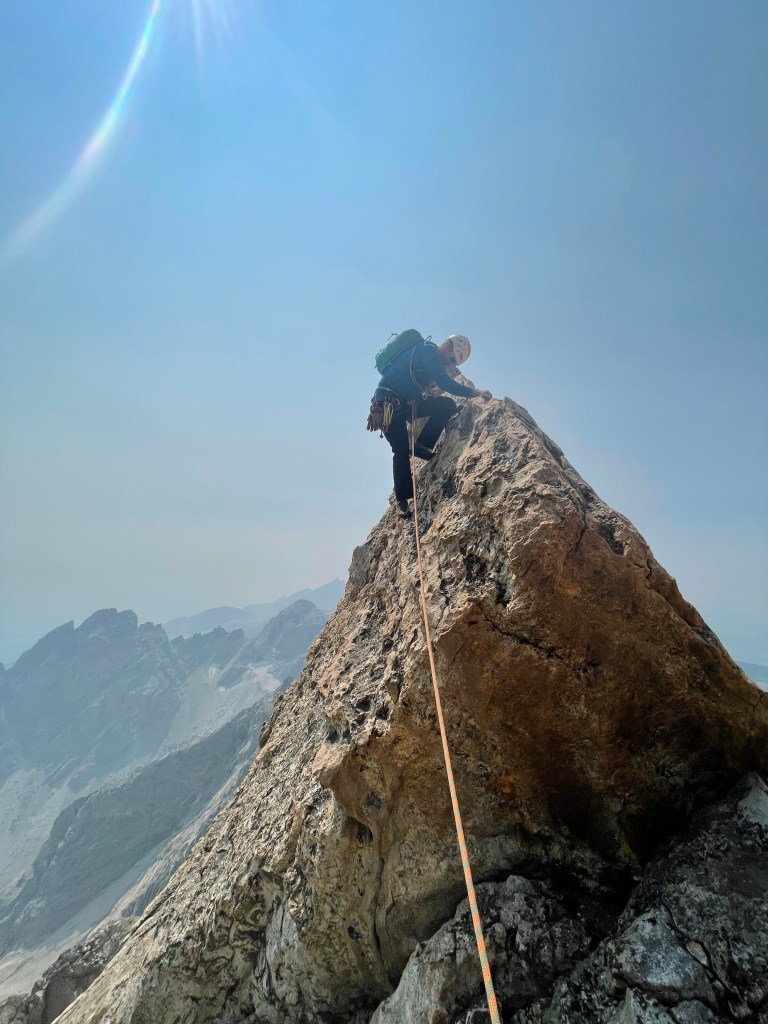
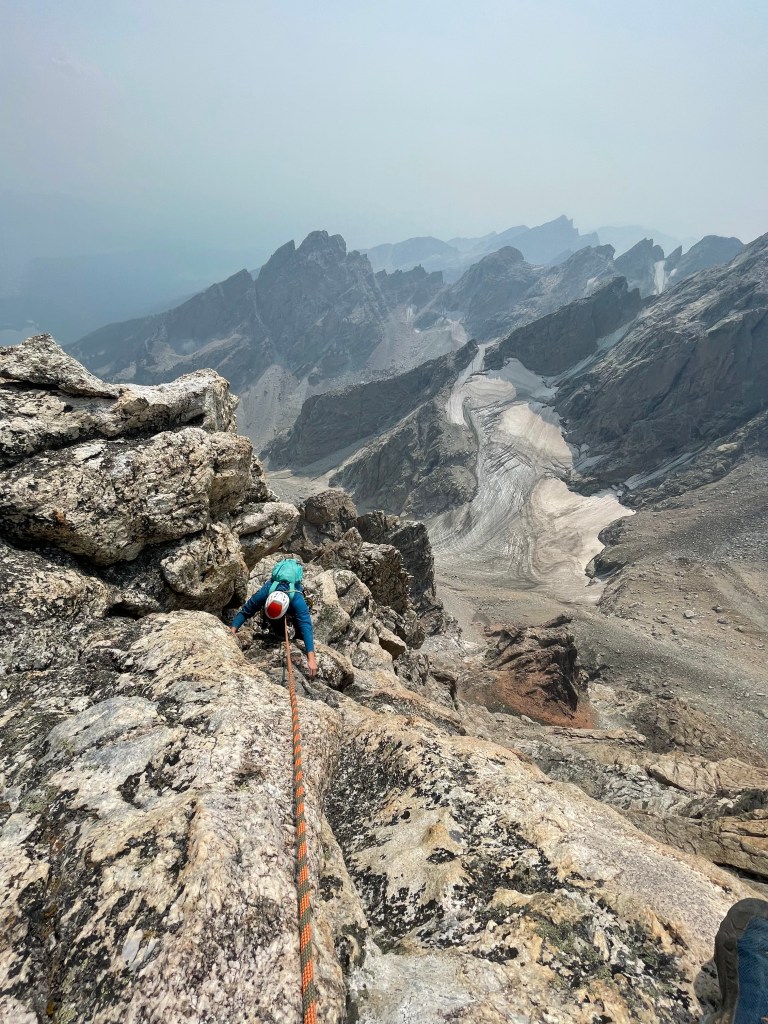
Adam, my climbing partner, and I climbed the Petzoldt Ridge in Grand Teton National Park. The climb is typically done over two days. One to approach and a second to climb and head back. We decided to go fast and light and not haul a bunch of camping gear to the base of the climb.

So we started at 2:00 am and headed up in the dark. We finished 19 hour later back at the car.

Here’s the thing about fast and light: You can’t take everything you want for every scenario you might encounter. But you don’t know what you will face.

You could find yourself in a rescue situation. You may miscalculate how cold or windy it is. Maybe a freak storm comes that you weren’t expecting.

So choices have to be made.

Knowledge and technique is something you can bring an unlimited supply of. That has to carry over in other areas of our lives.

We can’t bring everything but we can rely on our skills, our experiences, our decision making when we find ourselves in over our head.

Thanks Adam for the climb. That one was for the books.

Superficial

Because our culture has become highly obsessed with the superficial, there are many who are willing to compromise their values to keep up appearances.

An easy example: Here in Utah, we are faced with an extreme draught. Yet, many of us are not willing to let our lawns die because we are afraid of how the house will appear. (This isn’t to water shame. I’ve posted my thoughts about how to address the water crisis in Utah.)

Some more:

We don’t give a parking spots closer to the door for the CEO because there is a medical reason. We do it to show status. The fact is that a CEO’s pay has increased 940% since 1978 and many are struggling to get by. Everyone has a problem with wealth inequality until you are the one benefiting from it.

A Gucci bag isn’t more durable than a bag from REI. We buy it because people like us do stuff like this. Regardless what’s less of an impact on the planet.

Speaking of the environment, many of us care about the planet but still eat meat. Agriculture continues to be the leading cause of carbon emissions.

We are all hypocrites. That doesn’t mean we still shouldn’t try to change our behavior. But if we are telling ourselves a story of status and use it as a measure to fulfill us, I’m afraid this conversation will fall on deaf ears. Change feels impossible until it arrives on our doorstep.

Writing something memorable

Name the most memorable Powerpoint presentation you’ve ever sat through?

…

What was memorable about it?

Probably nothing.

What we were drawn to is the presenter if anything. Not what they had written on a screen.

The culture conditions us to get our information from a tweet, a quick Google search. But that’s not what changes minds.

If you want to be memorable, DO SOMETHING WORTH REMEMBERING.

What it takes to win a gold medal

Usain Bolt has won 8 gold medals.

Do you know the time he spent running for those 8 medals was?

115 seconds.

That’s it.

15 years of training for 115 seconds of performance.

There is no such thing as an overnight success. What we have is decades of work behind the scenes before anyone notices.

When it hits close to home

On October 2, 1985, Rock Hudson died from AIDS-related illness. Hudson was one of the most popular actors of his generation. His death stunned the masses.

That same very day, Congress allocated $190 million for AIDS research.

We don’t change our behavior through statistics. We change it when someone we know has been effected.

Climate change is easy to ignore when you don’t live on the coast. It’s even easy to dismiss that the smoke that fills our valleys are a California problem. But if you have a child with asthma, now it becomes a mission.

Masks wearing is to protect those around you. And if you have had a family member die from COVID-19, it is much easier to tell yourself a story that you don’t want someone else to go through what you did.

Statistics amplify a story we are already telling ourselves. We are not compelled to alter our behavior unless the story changes.

It doesn’t hurt to ask

It might though.

Because the last thing we want is someone who is being generous get to the point where they have to say no.

Capatalism has streamlined everything. The world has never been more effecient. It takes a two-minutes on Google to find someone faster and cheaper.

But if you want to solve your specific problem in a certain way, don’t be surprised that the answer is no.

No frees us from the constant incoming. Impossible to be everything to everyone. We must be somebody to someone.

Authentic

If I buy a NBA jersey online from China that is identical to the Official NBA jersey, is there a difference?

Since authentic, the way most people define it, would be a game worn LeBron James jersey–everything else feels like a knock off. So, we search for the next closest thing.

But there’s still an expectation. When I sit down at Olive Garden and order egg plant parmesan, I expect egg plant parmesan to come to the table. Even if the chef in that moment felt like making enchiladas instead. That is what professionals do. They show up to do their work regardless of how they feel.

Authenticity is overrated. What we want is consistency about a story we tell ourself about what is authentic. What rhymes with the experience I am searching for?

Thank goodness a heart surgeon just doesn’t decide on the fly to try a new technique on a patient when their chest is wide open. I am grateful that when I have a clogged drain, the plumber doesn’t suspend 100 years of best practice just because they didn’t feel like unclogging the same way they did yesterday.

Just show up. We want the professional you.

The law of the few

The Law of the Few states that 80% of the work will be done by 20% of the population. If ideas are going to spread, it will be up to the Connectors, the Mavens and the Salesman of the world to unleash the idea virus.

Everett Roger’s Diffusion of Innovation confirms that in order to hit a tipping point, you are going to need the help from these early adopters to get the idea to spread.

If you look at the anti-vaccine movement, you can trace it back to just a few.

According to The Center for Countering Digital Hate, 59.2 million followers are associated with only 425 anti-vaccine accounts. That’s it. Out of those 425, 20 accounts make up over two-thirds of the total followers.

To fight the epidemic of misinformation, it isn’t as complicated as we make it out to be. The dark patterns of the internet have allowed for us to get this point and it is costing lives. Like it or not, we can’t just say everything we want. I can’t walk into a church and yell, “Fire!” because causing a panic and an emergency when there isn’t one doesn’t make our culture better.

We live with boundaries and when we agree to live with them society works better. It’s smart when everyone agrees to stop on a red light or not to speed through a school zone. Because we don’t want live in a world where people are killing kids.

Make no mistake, the voices of many are represented by a few. One of the keys to take back our culture is to recognize which voices we give a microphone to. If Wikipedia can figure it out, the rest of us can too.

….

I highly recommend sitting down and reading CCDH analysis of the anti-vaccine movement and the spread of misinformation. Blown away with their work.

You never know someone else’s story

We think we do. Because we pickup little clues. But the gaps (and they are big ones) we have to fill in with our imagination and assumptions.

The truth is we don’t really know what someone else is going through even though we think we do.