Consequences

The problem with the consequences of our actions is that you don’t have to deal with them at the moment. Quite often, you can push them back for a different day.

Eating one marshmallow (such as sweets, cigarettes, not studying for a test…) doesn’t cause metaphorical diabetes or cancer. But do it again 10,000 times and then you have to live with the consequences.

It’s easy to say yes in the short-term because that’s the moment we live in. And since we only live once, it’s difficult to imagine a world without us in it.

The challenges are not things like climate change, these are side effects. The challenge is saying no to the thrill of instant gratification. It’s investing into tomorrow today.

Static vs. dynamic cultures

Static cultures, the kind of cultures that have stayed the same for multiple generations, are a real problem.

For a long time, your culture was able to survive by resisting change.

Today, this is far from true.

Farmers in the third world that refuse to plant a new seed or use modern techniques that will produce better yields resist this idea of change.

Why?

Because that isn’t what their parents taught them. It isn’t the seed they grew up using. Worse, what would my neighbors think if it doesn’t work?

With so little room for error, you stick with you know. You can’t imagine more than $3 per day, then why act any different?

The world has shifted so much in the last 200 years, and again the last three decades. Knowledge continues to accumulate faster than anyone could ever process. Change continues to come.

Yet, with all the tools at our disposal, is the culture you are building dynamic?

Are you willing to change jobs in a shrinking field?

Do you consistently ship work that might fail?

Are you able to survive a layoff for the next six months?

Change is uncomfortable. The longer you wait the more painful it becomes.

99% certain

Why do we say we are 99% certain about something?

Because we want to leave room to back out of a corner.

Because we are afraid.

Afraid we will be judged if we are wrong.

Today, the cost of failure is almost zero.

If you missed the mark and were fired from your job, you can find a new one.

If one blog post didn’t resonate with the community, you can write another.

If you are going to be 99% about something, you might as well be 100%.

The future is 100% uncertain.

Be confident in uncertainty.

When was the last time a police officer pulled you over for doing something well?

Probably, never.

By contrast, how many times have you been pulled over for making a mistake?

This doesn’t incentivize drivers to get better but to hide their mistakes.

Hence the problem. Drivers are always making mistakes. Rightfully so.

Time and motion studies have discovered that on average, drivers will make 400 observations, 40 decisions and one mistake every two miles. Every 500 miles, one of those mistakes leads to a near collision.

When you build a system to try and catch the wrong type of behavior, you don’t change it. Instead, you amplify it.

Notice what happens to your body language when you read the words, “License and registration, please.” Does it make your teeth cringe?

Changing norms requires more than catching the wrong kind of behavior or demanding compliance. It’s much more effective to focus on the right kinds of behaviors and rewarding them.

Seriously, why do we need speed traps anyway?

The hard work is setting a culture where you wouldn’t need one.

Imagine a world where a police officer pulled you over and asked you to sit with them for 15 minutes to watch traffic; pointing out the close calls while showing the statistics of accidents that involve texting and driving. Imagine if he could show you all the good drivers during that time block and what they are doing. Imagine if a police officer pulled you over and simply brought to your attention to slow down, “you’re worth it.” Imagine if a police officer was able to record you in the act of a good driving sequence and was able to send it to you in the mail as a surprise.

How would that change our driving habits?


They don’t believe me

Because they don’t see what you see.

Take a look at this juxtaposition of Ignaz Semmelweiss and Barry Marshall.

Both of them knew something that the rest medical community didn’t know. Both had an important discovery that would save many lives or make them substantially better. And they both were being shunned for their heresy.

The only difference between the two was that Semmelweiss couldn’t produce data to support his claims.

Even then, with all the research to support Marshall’s claim, it wasn’t accepted in the cannon right away.

Because facts don’t tell a story. They only amplify them.

Yes, you have to do the research, get it peered reviewed, produce the data, put it on a spreadsheet, present it in a PowerPoint presentation…

But ask yourself this: When was the last time you changed your mind after watching a PowerPoint presentation?

It doesn’t happen.

Proving something to be true and convincing others of it are two separate skills. The latter being the challenge of our day in the increasing reactionary, sorted world we are building.

We have plenty of data to support whatever claim we make, now it is about finding the truth that can help us build a better culture.

One that we can all be proud of.

Your mindset matters

Ellen Langer has pointed out that simply by suggesting to chambermaids that what they did for a living was exercise, they showed a decrease in weight, blood pressure, body fat, waist-to-hip ratio and body mass index.

That when the chambermaids saw themselves as people who exercised they acted as if they were people who exercised.

While it was reported that the chambermaids did not change their habits, we know that a placebo is powerful enough to change our behavior and even our chemistry.

Your mindset matters.

It matters because if you never see yourself as someone who goes to college then why would you graduate from high school? It matters because if you don’t see yourself giving a TED talk then why would I ever apply for one?

Because when we see ourselves as someone who loses their temper, we ignore all the times we keep it in check. And if we label our child with Opposition Defiance Disorder then we only highlight the moments he is not compliant.

The truth is, we are not always defiant. We have moments of defiance.

The label is easy to embrace when we struggle to ask for compliance. We embrace the label because of how it makes us feel. We think it lets off the hook.

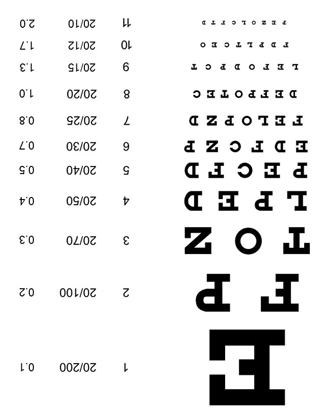
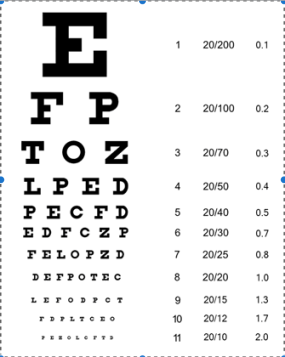
To prove a point, Ellen Langer reminds us that when we go to the eye doctor and read off the chart, that at some point we know there is going to be a line we cannot read.

Untitled

You know what happens when we flip the chart around?

Image result for ellen langer eye chart

Our vision improves. Why? Because we know as we go down the chart we are expected to eventually read it. We are expected to eventually succeed. And it is enough to improve our vision.

It is the same chart but with different interpretations.

Teens are the same way.

Post decision dissonance

It turns out that people on the racetrack feel much more confident about their horse to be victorious after they have placed a bet.

What changed?

Because nothing about the horse or track changed. What changed is the story we tell ourselves. That somehow by betting on this horse we have now improved its chances to win.

Human beings are extremely obsessed with being consistent. Consistent with the decisions we make and to appear consistent with the people around us. That once we make a choice or take a stance, we will put pressure on ourselves to behave consistently with that commitment. Subsequently, we build a narrative to defend and justify these decisions that will drive us to do things we would normally not do to create predictable outcomes.

Changing our minds has always been perceived as some sort of weakness in our culture. We are quick to label people as “flip-floppers.” That’s a problem. It’s a problem because the world is changing faster than ever before. Every day, we come up with new ways, better processes to do things, which are inconsistent with the way things have been done around here.

Just because this has been the way it always been (consistent), it doesn’t mean that it always has to be.

For decades, it was believed that ulcers were caused by stress; until Barry Marshall shattered the consistent thinking of how stomach ulcers formed by ingesting bacteria to prove his point.

Even after his findings were published, it took years for the medical community to adopt the practice. Why? Because it wasn’t consistent with the cannon about stomach ulcers. It wasn’t consistent in the eyes of other doctors and scientists that a small university, like the University of West Australia, couldn’t possibly publish such important work.

The opportunity of our time is to learn to embrace inconsistency. To say, “knowing what we know now, we are going to act accordingly.”

It takes guts to admit that the horse we picked wasn’t the winner.
Arriving at a conclusion first

It’s a difficult spot to be in. To be the first to show up, to look around and see no one else there. To not have any confirmation that this is the place you need to be.

That’s how difficult problems are solved though. Someone has to come to the conclusion first.

At that moment, it is tempting to think you did something wrong.

The trick then isn’t to go back and start again but to sit with this tension and wait. Wait until others come to the same conclusion as you have.

It turns out, it’s difficult to sit on an island. But as long as we don’t die on it, we can stand to be more patient while we wait for others to arrive.

Everyone is in a crisis

Chances are if you acted like everyone that approached you was going through a crisis, you’d be right almost every time.

Life is so fragile and precious, and yet, it seems as if it’s all held together by duct tape.

The good news is they say that duct tape fixes everything.

Dr. Google

One problem with Google, particularly when it comes to our health, is that it is easier than ever before to pretend to be a doctor.

That with a simple google search and you can find three thousand articles on a subject. It easy to feel qualified to make a diagnosis.

Here’s the problem with this, the internet isn’t just a collection of data but a place to amplify a story we tell.

To make the fear louder, to establish confirmation bias…

The internet is great to look up things like a DIY video of how to do an oil change. But until we can gain the discipline to not jump to a conclusion when we are scared, the internet is not the place to seek a diagnosis.

If the answers we seek aren’t fitting the narrative, we will keep looking for something until it does.

(Which is how the anti-vax phenomenon continues to spread.)

Because we are not seeking the truth, we are seeking confirmation.