More about the benefit of the doubt

We treat friends different than strangers. Information is less scrutinized by those we have given the benefit of the doubt to. And what we are taught at a young age often goes un-scrutinized too.

When we are born our minds are a blank slate. Like sponges we are constantly soaking in new information. As we get older, we develop the ability to critically think. So we are careful what we process. We don’t want to duplicate and we know what we like to think about–protecting our narrative of the world as we understand it.

That narrative is invented.
Familiarity with failure

How acquainted are you with failure?

Is it a daily thing or once per year?

Are you picking projects for the boss that you know you can succeed in?

What is the last failure you can point to?

You don’t need every idea to work, you just need one. Then you can do it again.

Failure is a process not a singular event. Don’t just show me your greatest hits, let me see you discard pile too.

The best sales reps know that with every rejection they are one step closer to making a sale. Why is it so hard for the rest of us to adopt this mindset? Because most companies don’t allow for anything else other than productivity.

Lighter wallets

1 in 5 people believe the new iPhone is worth going into debt for.

Don’t get me wrong, if you can afford the nice tools, get them by all means.

But…

We don’t need more space when you have a cloud. We don’t need more speed when everything is instance. The cameras are already better than anything from 20 years ago.

Think about how powerful each of these phones are today, what are we really purchasing?

We want status. We want the story we are going to tell by holding the new iPhone. And we are willing to trade something (time, energy, money…) for these artifacts. Even when they are against our own best interests.

Miracles

Each of us is an expression of the universe. Call it what you will. We are the results of millions of years of evolution in the making.

It’s a miracle.

An important reminder: Life is so precious because of how rare it is to find in the universe.

Deciding every day

Is now and then again tomorrow.

You’ve made the decision today to go to the gym or to sit down and type a page of your book.

And then you have to decide again to go to the gym or sit at your laptop. Because you don’t just reach your goals after one session. You have to do it again. And again and again.

Until you’ve reached your target weight or you have a book published.

The moment to decide (especially at the beginning) is constant decision we make. Creating cognitive load. Yet, now that I’ve published 2,000 blogs its not much of a decision anymore–it’s just what I do.

Getting to this point, to becoming the kind of person that wakes up before dawn to get to the gym or writing every day despite not feeling like it, is really hard. Necessary going for the long haul.

What is normal?

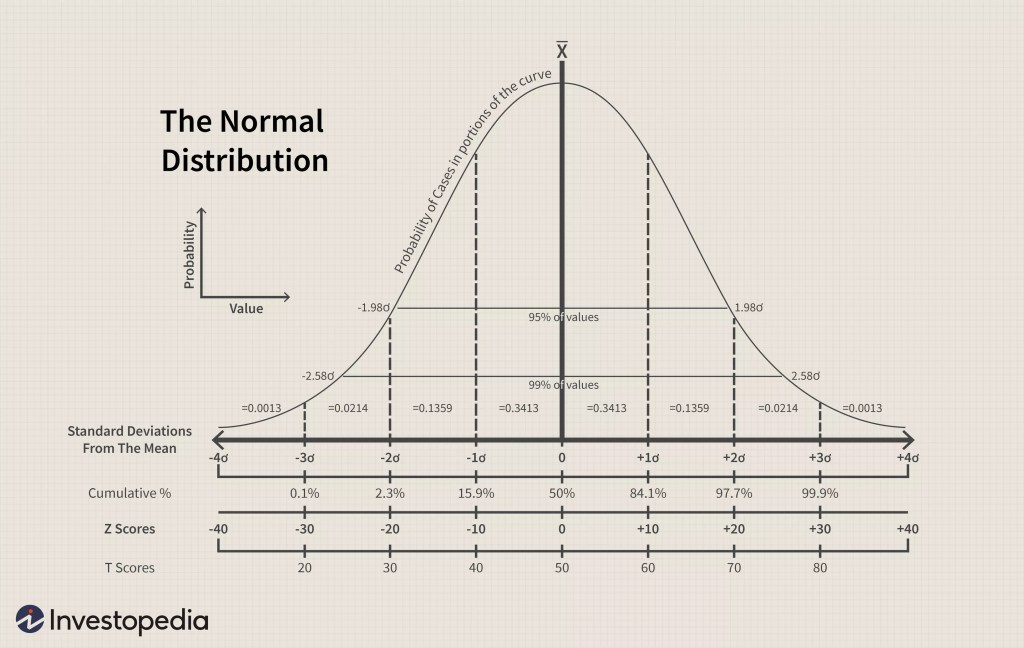
If we plot normal on a graph it would look something like this:

Typical Bell Curve

Whether we are talking about height, weight, personally traits, how high someone can jump–we will find a “normal”.

There is nothing exciting about normal. It’s invisible and yet it’s everywhere we go. We look for normal because it is familiar to us. It’s only when someone chooses to stand out of the crowd we even notice.

Normal is a statistic. A distribution. Not a person.

Do you really believe you were born to be normal?

Getting to yes

Whether you are selling kitchenware or asking for a donation for your nonprofit, there’s a gap between No and Yes.

Pro tip: It’s easier to make a sale when you are on the side of angels.

When you sell a product or service that you actually believe in, one that solves someone’s problem–you have nothing to worry about in asking for a sale.

[It took me a long time to understand this. Even after I got a sale, I would still try to convince people about it. Once I recognized my insecurities, it has been much easier to ask since.]

Rock in the shoe

Semi-rad makes a great point. A rock in our shoe is much smaller than what we think it is.

That’s what happens with persistent problems–small ones turn into big ones rather quickly if we don’t stop what we are doing and take care of them.

That thing we leave undone, the one that we dread, is it actual chronic pain we are avoiding or simply a rock in the shoe?

Perception isn’t reality.

Who we are isn’t what we do

“I’m not a writer.” So we ignore all the opportunities to be a writer.

“I’m not a rock climber.” As a result we don’t take a class or join a gym.

The opportunities to invent yourself are everywhere. More than we could ever fully capitalize on.

So many possibilities are flying by, it’s easy to turn around and say, “That isn’t me.” But when we do something new for the first time, we might just change the fabric of who we are.

We are not our work (or our job or resume). Who we are isn’t what we do but what we do can sometimes change who we are–if we let it.