Better performance

It easy to blame the driver for poor performance.

So one simple, easy solution is to switch drivers.

But overtime, what you will find is that switching drivers doesn’t actually fix the problem.

The driver has taken this vehicle as fast and as far it can go.

You’re better off switching vehicles.

Did you care enough?

It doesn’t really matter that you did everything to spec, under budget and that your product shipped without a glitch.

It doesn’t matter when you shave a little here and a little there to save a few bucks.

It doesn’t matter that you greeted every customer that walked in the door today the same way you did yesterday.

What matters is: Did you care enough? Did you care enough to look someone in the eye and tell them the truth, something that they needed to hear (not just what they wanted to hear).

Your job isn’t to answer emails and to sit through meetings. No, your job is to make a difference. Making a difference starts with a person willing and eager to say, “I am going to do this.”

You’re not one in a million. You’re actually one in seven billion. You are unique beyond measure and you are more powerful than you think you are. So stand up and make a ruckus. Go do something interesting. Make some noise. Play a note worth playing.

The world will always be in short supply of people that care. We need you, desperately, to show up.

Pulling the string

There are certain threads each of us are capable of pulling. The problem is we become comfortable at letting other people pull the strings.

We are happy and content until we are no longer happy and content.

We wait too long for things to happen to us instead of inventing a different future. The longer we wait the harder it is to pull.

Yeah, we don’t know what is going to happen. That’s the point. Nothing begins to unravel unless we become curious.

It’s all invented

We reach an understanding of the world by:

  1. Our senses retrieving selective information.
  2. The brain constructing its own simulation of these sensations.
  3. Having a conscious experience.

The world comes into our consciousness as a narrative, a story we have already told. We see what we want to see to preserve ourselves. But what is critical to our survival now, isn’t the same as it was 7,000 years ago. A saber tooth tiger isn’t going to pounce us, even though we think it will.

Technology and education and modern medicine and industrialization have significantly improved our lives. We live in the safest world in human history. Yet, we continue to make tons of decision based on incorrect perceptions on what the world really is.

It is unlikely to ever make your fears completely go away. So, instead of trying to make the fear go away, embrace it. Learn to dance with it.

[Read more about this idea from Roz and Ben Zander’s book.]

We’ve won

We are the dominant species roaming the planet. We are at the top of the food chain.

To get there, we built a narrative to be fearful of everything around us. We can’t shut it off. It’s what has kept us alive for thousands of years. It’s what gets us to duck when we someone yell fore.

But now, the narrative that runs deep in all of us is working against us. The challenge isn’t to figure out who is going to kill us today. No, it’s how do we stop ourselves from killing each other…

Poking holes and unraveling habits we have accumulated to get to the top isn’t going to happen overnight. Alas, it is difficult to change people’s minds.

There isn’t anyone left to conquer. What’s left is how are we going to take care of each other.

Coincidence: predicting vs inventing

It turns out human beings are excellent story-telling machines. We have thousands of thoughts that go through our heads everyday.

Occasionally, someone will pop up in our minds that we haven’t thought about in a long time. And then suddenly, we get a call from them. “What a coincidence.”

But it wasn’t a coincidence (perhaps low probability). We weren’t surprised when the other 100 people we thought about that day didn’t call us. But it is innate in our nature to ignore data and evidence to fuel an internal narrative—our story of how we see the world.

We can wait a long time until the future aligns with the stories we choose to tell. In other words, we wait to be at the right place at the right time with the right resources until the future has a predictable outcome and then call it luck, coincidence or chance.

What if instead we work to invent a future, one where we align our stories with what happens. We pause and think that’s interesting, why did this happen instead of being upset about an unforeseeable event or unfavorable outcome. Was there always a chance this could happen? Was it low probability?

We tend to blame out environment when thing go wrong. But we don’t give the enviroment any credit when things go right. We credit our personality. We credit ourselves.

Too many of us are seduced by the idea of waiting to have a self-fulfilling prophecy and, consequently, we ignore the evidence, the data, the work right in front us.

By putting ourselves back in the driver’s seat, we can move towards a future where we want to go. It enables us to do more work, to get out of our own way. It allows us to change something and make it better.

Ironically, we are at our best when we are working to invent a future (one that we can be proud of), we become better at predicting what happens next when we’re working towards desired outcomes. We’re not waiting for things to happen to us. No, we are busy making things happen.

What I learned blogging everyday for a year

Everyone should start a blog.

Even if no one reads it.

Making an observation, taking a position, admitting when you are wrong will help you see the world as it is.

And if you can learn to see you can become better at predicting what is going to happen next.

You won’t always be right, but you will be better than the rest of us.

I’m finishing up my first year of blogs. Number 365. Am I Pulitzer Prize winning author yet? Nope. Not even close. But I am better from when I started.

Blogging isn’t for credit or money or fame. It’s a gift. I hope it can be an ignition for someone to make something happen.

On the days that Resistance gets the best of me, I can always look to the blog to see that I made a contribution. I know I tried to make the world a little better today.

Speaking of Resistance. Writing something, publishing it for the world to see, shipping everyday can’t help but make you a better person. It helps you be more vulnerable. It helps you stand up to the critics and shun the non-believers.

It is really hard to change people’s minds. My goal has been to shine a light on a path for others to see that might provide an alternative to where you are currently going.

This blog isn’t for everyone. It is for someone. You. Thank you. Thank you for reading. I hope that it has brought us closer together.

You didn’t need to count me out

It’s hard for anyone to overcome an environment of low expectations. The culture won’t expect much from people trapped in a different centruy. The worst thing we can do is to presume less of them too.

Expect more.

With a little push and a helping hand there is no telling what someone can do.

There is someone on your mind right now that you can reach out to.

Go to them.

Anaecdotal

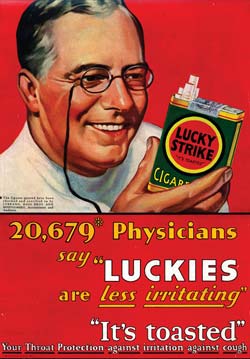
50 years ago, doctors were prescribing cigarettes to get rid of a nagging cough.

Fake news isn’t anything new. What we are realizing though, is that it is a reflection of ourselves—of what we want.

And what we want is to believe that cigarettes don’t cause cancer. So we will search for “evidence” or “statistics” to support our narrative. That it’s actually not that bad for us. (The benefits outweigh the cost.) We can continue to do whatever it is we want to do—free of the guilt and shame. We can push the consequences further away.

Hence, the real problem with fake news is: Most people have already made up their minds about the world. Their opinions are formed. They are set in their world view. Which leads us down a dangerous road of picking your own truth.

The answer isn’t to make up our minds and then search for news to support our believes. The answer is to have the courage to say, “I don’t know.” The answer is to be persuadable. To be curious. To be a truth-seeker. And to be open to change when real evidence presents itself.

Most of the time, when we make a mistake it won’t cost us more than inconvenience. One cigarette won’t kill us today. 20 won’t either. But 20 cigarettes per day over a lifetime will cut years off your life.

It’s the accumulation of everyday decisions over an extended period of time that form our culture. Hopefully, it can be a culture that we’re all proud of.

[The best antidote for fake news: Before we send anything out ask yourself, Is this something you’re proud of? Would you put your name on it?]