How many people does it take to change the world?

Nathan Winograd worked at the Society for the Prevention of Cruelty to Animals in San Francisco. What most people don’t understand is that SPCA wasn’t designed to help animals but to get rid of them. Every year, they would euthanize over four million animals.

Fed up with how things were, Winograd attempted to start the first no-kill shelter. When Winograd went to the city council to plead his case, people flew from all over the country to testify against him. His critics said it couldn’t be done, it would be inhumane and it would be financially irresponsible.

Winograd persisted. He went to the few who cared enough to join his cause. And it worked. After a few years, San Francisco became the first no-kill city. Winograd went on to do it again in other places like North Carolina and Reno.

It turns out, the best way to change the minds of the majority, to challenge the status quo, is to enroll 25% of the population. The challenge in our day is figuring out how to get 25% of the population to support your movement.

It’s a common misconception though to think we must change the minds of everyone in the entire world. This isn’t true.

Winograd didn’t have to change everyone’s mind. Most people don’t care about animal shelters. He went to the tribe of those who did care about animal treatment first. And then pleaded his case to the ones who might care next.

The world is divided into tribes. Tribes are defined as an assembled group with common interests and goals (insiders).

Rockers who prefer Van Hagar over Van Halen is a tribe. Skiers who enjoy riding $60,000 gold plated skis is a tribe. Apple has a tribe. So is Samsung, Nike, and REI.

When we are talking about changing the world, we are not actually talking about changing the entire world—we are talking about changing a segment of the world.

Another way to think about this is the Presidential election.

If the Presidential election has taught us anything, it’s that you don’t aim your message to everyone who can vote. No, you target those who do vote. Specifically, the swing voters, the ones who are not sure who they want to vote for yet.

Social change starts at the edges. A small group of people that are eager and ready to be assembled.

Slowly, over time, as your movement grows, once you hit the tipping point, you have an opportunity to cross the chasm. And maybe, just maybe, make the change you are seeking to make.
Don’t treat the internet like an arcade game

By 1982, four years after Space Invaders launched, it had grossed over two billion dollars. Equivalent to seven and half billion dollars today.

Here’s the thing, arcade games are designed to repeatedly feed quarters into the machine until your stack runs out. (Think of the urgency the countdown creates when you’re out of credits.)

Once you’re out of pocket change, it’s game over.

This is completely different from how the internet operates.

The thing that makes the internet so great and to have the means of production right at your fingertips is…

If you mess up, you can try again.

The cost? Almost nothing.

The work you do doesn’t need to be perfect before you ship it anymore.

Ship it and then continue to make it better.

Your first shot isn’t your only shot. There’s no cost for another turn.

What do you need more of to succeed?

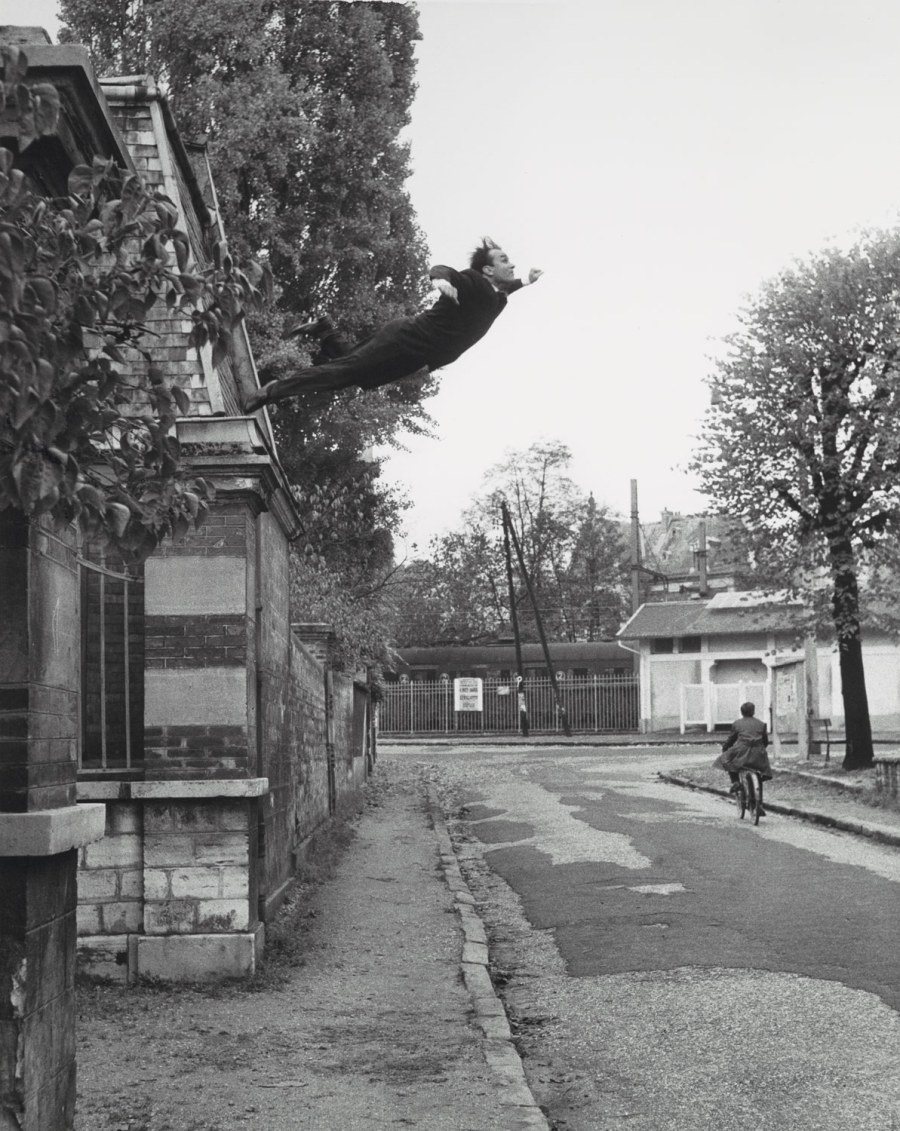
1992.5112

This is a photo of/by Yves Klein called Leaping into the Void.

Leaping not because he knew for sure he could fly, but rather, he believed he could.

We live in a culture that is quick to categorize the improbable as impossible by stacking one false limit on top of another. Creating an illusion that you have gone as high as you can go.

Sometimes we need a hammer. But often, the thing we lack the most is the courage to plunge into the unknown.

How high will you dare to fly?

What would you do if you had nothing left to lose?

After WWII ended, the Japanese were struggling to pick up the pieces. Tokyo was wrecked. And for Masura Ibuka, things kept going from bad to worst.

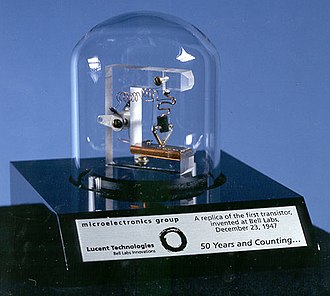
Hanging by a thread, Ibuka wanted a project that could put his little company, Tokyo Telecommunications Engineering Corporation, on the map. He turned his sights to the new transistor radio released by Bell Labs.

330px-Replica-of-first-transistor

As you can see, the original transistors used a vacuum tube and was so bulky they were viewed as a piece of furniture.

Ibuka looked at this and wondered what a transistor radio would look like if it could fit in your pocket?

(Sound familiar?)

After several years of trial and error, Ibuka and his team did the impossible and created the world’s first portable, pocket-sized transistor radio. The TR-55 became an instant hit and it completely changed the culture of how people listened to music.

Ibuka would later on rename his company to what we know today as Sony.

As a result, many Japanese companies followed Sony’s example in exporting electronics. One year after the TR-55 was launched, the total number of electronics exported from Japan increased 2.5 times.

Japan economy would go on and make a miraculous turnaround, becoming the lead player in global electronic exports.

For most of us, conditions will never be optimal. There will never be enough time or money or resources.

It will always feel too early to begin. The fact is, in order to reach the end of your journey, you must start at the beginning.

The beginning is where you will find yourself with nothing to lose.

Don’t waste the opportunity.

“How did you go bankrupt?”

“Two ways. Gradually, then suddenly.”

Hemingway accurately describes how human beings hit rock bottom.

At first, it’s slow and gradual while the small and seemingly inauspicious decisions we make work overtime to knock us down.

Until one day, you wake up the person you said you would never be.

The fraud police

Sometimes we can fall into this trap of thinking there is a plethora of critics ready to pounce on every mistake we make.

The truth is, there are not that many voices—it’s the same voices criticizing over and over again.

Speaking criticism into existence is far too pedantic for the important work of moving mountains.

Two hurdles great ideas need to overcome

It took James Dyson five years, 5,100 prototypes before he got his first Dyson Vacuum just right.

Despite having a superior product, it was laughed at by all of his competitors for not having a bag. In fact, no one in the UK would even manufacture it. Not because his product wasn’t good, because we couldn’t see.

We couldn’t imagine a world of bagless vacuums. It wasn’t what we were used to.

The world is full of people with great ideas. Great ideas are not in short supply anymore. What’s hard is:

Having the guts to finish

And

Getting past the fear people have of change.

Forward progress depends on overcoming these two hurdles.

Two kinds of hustles

The first kind involves winners and losers. Exchanges are closely monitored, every penny is carefully divided. What you give must be less than what you get.

The other kind is a sprint. A short burst, giving it your all to make change happen.

The question we need to understand is: In a race to the bottom, who wins?

Why fight for every inch when there is plenty of room at the top.

First one, then ten

Your first victory is different from your first break.

Your first victory will be quiet. You won’t receive the red carpet treatment. But you can be proud because you likely changed one person. (Maybe even yourself.)

Then, you get to do it again.

Building a body of work. Little by little, drip by drip, getting more attention and more trust with each interaction you make.

Until your first break.

You hit the tipping point. You’ve crossed the chasm. You’ve reached the masses.

Once you’ve changed one person, then you can change ten. Yet, most of us wrongly think it’s the other way around.