Putting your money where your mouth is

Alta Ski Lift recently implemented paid parking to “preserve the weekend experience”. Anyone who has been up there knows the parking situation is a mess.

There are a lot of ways to preserve an experience though. One doesn’t have to charge to preserve anything in this situation. Now, ASL is charging people to ski in the backcountry.

The story doesn’t align.

What you say has to match with what you do.

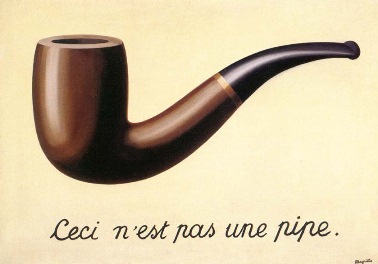
This is not a pipe (the tragedy of compliance)

René Magritte painted this fantastic piece of a pipe. On the bottom, it reads, “This is not a pipe.”

If it isn’t a pipe then it must be a picture of a pipe. But as it states it’s not a pipe. But clearly, there is a pipe. But it says it’s not a pipe. And on and on and on. It’s a paradox.

I woke up this morning to the awful news of candle factory workers being told to get back to work or they would be fired if they left their post while tornado sirens were going off. 8 people died!

That is what indoctrination of compliance does to us. It turns middle managers into murders. The fear of getting fired is so strong–where will we go? How does that look on my resume? I don’t know the whole story of what happened but I can say this:

This is not a pipe.

(I’m obviously not talking about a pipe here.)

Worrying about the next step

Worry about the next step before it has happened causes two problems:

One, you are experiencing the outcomes before it has even happened. Which is likely imagining the worst thing.

And two, you are hiding from the present moment.

Focus on what you can control–which is very little. And work on the next step when it arrives on your doorstep.

The next step is always the most important step.

How safe is the job/school/project you are picking?

Will anyone criticize you for this decision?

Is there any room for failure?

Who are you disappointing? Better question: Who is it you are trying to delight?

How daring is it?

Perhaps it’s worth evaluating the decision you are making: Are you doing it for yourself or for someone else? Are you picking this thing because is it’s safe and sensible or are you picking an adventure?

The ultimate marketing problem

How do you convince someone to change their mind about something that they are cemented in?

Loss aversion is the idea that a loss hurts more than a gain feels good.

In other words, we can’t take something away that we hold dear without replacing it with something else.

Common sense

Today’s definition of common sense is using sound judgment in practical matters that are shared by most people. But it isn’t what the original word meant.

The phrase common sense originated in the 14th century from Aristotle’s work, De Anima (On the Soul). Aristotle described common sense as how humans and animal minds link categories of different tastes, colors, touch, smell, and sound to perceive things as real.

For a long time now, industrialism and schools have brainwashed us into compliance. So much so, our culture today needed a word to describe the feeling of reinforcing the status quo and group thinking. But compliance is not real. These are imaginary lines we draw to keep production moving.

Time on the wall

Lynn Hill, the first person to free climb The Nose on El Capitan without the use of aid, talks about how there are plenty of climbers strong enough to free The Nose but few are willing to spend the hours on the wall to do it. For obvious reason. It’s extremely hard work sitting on a portaledge thousands of feet off the ground.

It shouldn’t be a surprise then that the king of El Cap is none other than Tommy Caldwell. He’s freed more routes than anyone. He put the time in.

We get hung up on the talent or prerequisites or skills needed to try something daring. And yeah, you are going to need some of that to get going. But that is all you need–have enough to start and then see what happens next.

Putting in the time is what produces results.

Where others see talent, I see time spent.

Bullet fired vs. bullet dropped

Stories can change. They can evolve with experiences and also with what we are taught. Science, on the other hand, is completely different. Science doesn’t change. You can’t argue with a math equation. And the laws of physics are laws for a reason.

We might not think that a bullet dropped will land on the ground at the same time as a bullet fired. Our brains have a hard time visualizing it and immediately say, “No way.” But just because we don’t understand something doesn’t make it less true.

Are we all suckers?

The other week, I was on a plane ready for takeoff. The thought occurred to me that we were about to fly 500 miles per hour at 30,000 feet.

Are we all just buying into this? Are we just going to trust that everything is okay? I certainly didn’t inspect the equipment and don’t know the first thing about aeronautics. But enough flights have been done before to make a reasonable assumption that this flight will be okay too. So, I go along.

Here’s the thing: The 40-hour workweek is a human invention. An arbitrary number that (thankfully) is down from the early days of industrialism. Yet, we become so used to the standard it’s difficult to imagine any other approach.

There’s no correlation between going to a famous college and happiness. Yet, we chase that status symbol as if life depends on it.

We get used to things and we buy into them. Which systems have we bought into for so long that we can’t even see how detrimental they are to our culture anymore?

In Poker, when you can’t tell who the sucker in the room is, it’s you. Time to fold and try another table another day.

…

What else are we just blindly accepting?
Discoveries

We don’t know why humans lost their fur. There are theories but nothing conclusive yet.

And we are still figuring out black holes and how time works.

Lots of mysteries in the universe waiting to be solved.

Just because we don’t understand something doesn’t make it less true.

These laws are discoveries, not human inventions.