Genius is as common as dirt

What does Pablo Picasso, Bob Dylan and Shepard Fairey have in common?

Nothing really, except the fact they are known for creating art.

It turns out that genius is not something you are born with. Genius crosses social-economic lines and appears in many different forms including speeches or music or painting.

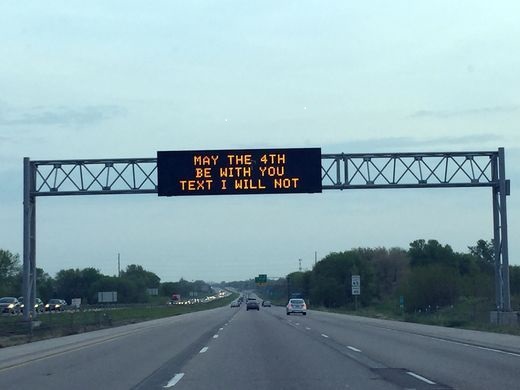
But it can also appear while driving down the freeway.

download

That person was being a genius. You can be too if you are willing to go on a limb.

The cost of a really good failure

Here’s the interesting thing about failures these days, they don’t cost that much.

Think about it. You can start a design line on Etsy, write and publish an Ebook, start a cooking master class on YouTube, open your photography business with an Instagram account and a WordPress site.

Your list of ideas that you can try is literally endless. And if fail it doesn’t cost you a thing (aside from time and a few bucks).

Your resume can be chocked full of failures and it won’t hurt you. Because you only need one success to build a whole career on. Just one.

The worst choice we can make is to do nothing. Avoid being seen or heard, avoid criticism long enough, no will ever care about the work you do.

The five most dangerous words in the English language

“This time will be different.”

It’s part of the story we tell ourselves. And it’s also why most of us turn off when we hear about a friend who wants to stop smoking or to lose weight.

Because results don’t change until we work to change the environment around us. The marshmallow is too seductive otherwise.

In the words of Ernest Hemingway:

“How did you go bankrupt?”

“Two ways. Gradually, then suddenly.”

Everyone can recognize rock bottom once they get there. We just have a difficult time seeing the journey and decisions that led to that moment.

It’s never too late to turn around. “I’m going to try again.” Better words to live by.

“I can’t” vs “I don’t”

You can’t escape habits.

Good ones, bad ones—doesn’t matter.  You are a creature of habit.

Instead of fighting to stop a bad habit, it’s possible to design behaviors in a way that replace bad habits with, well, good ones.

For example:

If you are to say, “I can’t eat marshmallows.” The “I can’t” isn’t an empowering behavior.

By contrast, you could say, “I don’t eat marshmallows.” That’s a choice. One you can make each time.

That simple switch is effective enough to make change happen. Telling a better story can make all the difference.

[Of course, this isn’t really about marshmallows.]

This is water

Once upon a time, there were these two young goldfish swimming along until one day they happen to come across an older goldfish swimming in the opposite direction.

The older goldfish as he passes nods and says, “Goodmorning, how’s the water?”

The young fish occupied kept swimming along until finally one of them turns to the other and asks, “What is water?”

It’s difficult to see what’s all around us without the lights flipped on. And I think too many of us operate without this awareness of what we are even swimming in.

This is water.

And because there is so much information to process, so much we can’t see; we create shortcuts to make sense of the world. As a result, we create biases, prejudices because we think we know what others are going through.

This is water.

And the way that our brain works, we are constantly afraid. Afraid of being seen, afraid of being judged. We are afraid that sabertooth tigers are going to attack us. Of course, there are no longer sabertooth tigers anymore so we substitute and equate the same risk when the teacher calls our name or when our boss sends us a text to call them back.

This is water.

The water is our default setting. And without awareness, we would know no better. Because that is what the culture and the status quo pushes us towards.

This is water.

HT David Foster

About having the destination in mind

Quite the paradox, really.

In order to start, you need to know where you are going. But if you have never been there before, how do you know if it even exists?

We can’t envision a world where we quit our job and start a non-profit, we can’t see the book we want to write beforehand…

It takes a leap of faith.

That the world you imagine does not yet exist. That takes guts to create without the use of a map.

May I suggest, all we need is enough to start. Enough to take the first step into the unknown and let the light follow.

We can’t see the destination but we can have the courage to step forward.

“Technology will solve our problems”

Some of us have put an enormous amount of faith into this idea that no matter what the problem we face, there’s a technology that could be invented to solve it.

And for a lot of things, that is totally true.

Once the car was in mass productions we needed roads, traffic lights, gas stations, parts for repairs, mechanics, laws, driver’s ed, highway patrol, driver’s licenses, DMVs, plow trucks…the list just keeps going on and on.

But this isn’t what technology wants. Technology doesn’t really want, well, anything. Technology doesn’t care if the world is heating up by two degrees. Technology doesn’t feel the same urgency to solve problems as humans do. It isn’t on the clock to change.

And ss fast as technology has evolved, problems evolve faster.

(Reckless driving, drunk driving, high emission vehicles, oil dependency, environmental hazards…)

Tech doesn’t exist to solve our problems. We do.

As great and wonderful as technology has been to us, it is now creating more problems than it is able to solve. At least at the moment.

Because technology doesn’t change behavior, it amplifies it.
History is one click away

No other people in human history have had the ability to search so quickly the failures of past societies.

We have more access to more information than ever before.

Which means we can learn from our mistakes rather quickly.

History is one of the ultimate teachers. If enough people will choose to care, we can overcome anything that comes our way.

Measuring from this close

Without Googling, can you name who finished first place in the 2016 Men’s 100 Meter Dash?

If you guessed, Usain Bolt, you would be correct.

But can you guess second place?

Answer: Justin Gaitlin

The gap between these two competitors was eight-tenths of a second. Eight-tenths!

All that training, all the years of sacrafice and hours spent just to lose by less than a second. It’s heartbreaking.

The fact is, when we are pushing limits, measurements come in millimeters, in tenths of a second. (Difficult to see improvement day in and day out because of this.)

It takes a lot of time to improve what we are already good at. Especially when we are talking about the best in the world.

On the areas where we struggle though? There is a lot of room available.

We get to choose what we want to improve but it is worth noting: Becoming well-rounded is easy. Becoming highly specialized is very difficult.

There aren’t many that choose to take difficult paths.