Competence is dead

Competence used to be very valuable in our industrial culture. Here, follow the instructions. Don’t make mistakes. Get paid.

And now we are moving away from competence. Does anyone really know what is going to happen the next twenty years? How about ten?

The culture is moving too fast for anyone of us to keep up. We live in a constant state of change which means there is no time to be competent.

The alternative is to adapt. Learn a skill that can’t easily be duplicated. Pick up a book instead of watching Netflix. Start a blog. Want to become a screen writer? Write a play for the local theater and give it away.

The factory worker is a dying profession. And it isn’t just factories–any job that can be written down can easily be replicated. And if it can be replicated, they can find someone cheaper.

It doesn’t matter what happens next if we put together a resilient system to withstand the winds. The best you can do is make yourself indispensable in a world that is increasingly pushing us to be mediocre.

There is a reason why adults color within the lines

As kids our computers are blank. And so we are shown which rules we need to follow. Nature teaches us not to touch the stove if we choose to ignore the wisdom of our care takers.

Then we go to school. Mass indoctrination and mass instruction. Follow the rules, be compliant and some day you will be rewarded for this behavior.

At some point, we forget to be curious. We forget how to explore the edges. Perhaps, the problem of this generation is that we are still waiting to be told what to do next. Just like school. We don’t pick projects, we are given them. Which is why it is so difficult to get someone to break their status quo. We have not developed the kind of culture that encourages us to reach for the stars. We just like talking about the few who do. We tell ourselves “someday” that will be me.

Art and joy and happiness isn’t going to be found on Netflix or on a Tweet. It isn’t going to be handed down from the boss. It comes from throwing away the useless map we have been seduced to believe will bring us the purpose we are seeking.

When the Resistance shows up

When Resistance shows up it means you are on the right track of something bold and daring.

Otherwise, why would it be there?

Perhaps, you are nervous about what the boss may say if you fail (or succeed).

Perhaps, you might lose something–your time, money, energy, status.

You can count on one thing: Resistance will only keep ramping up as you get closer to the goal.

Your choice to embrace it or waste energy wishing it would go away.

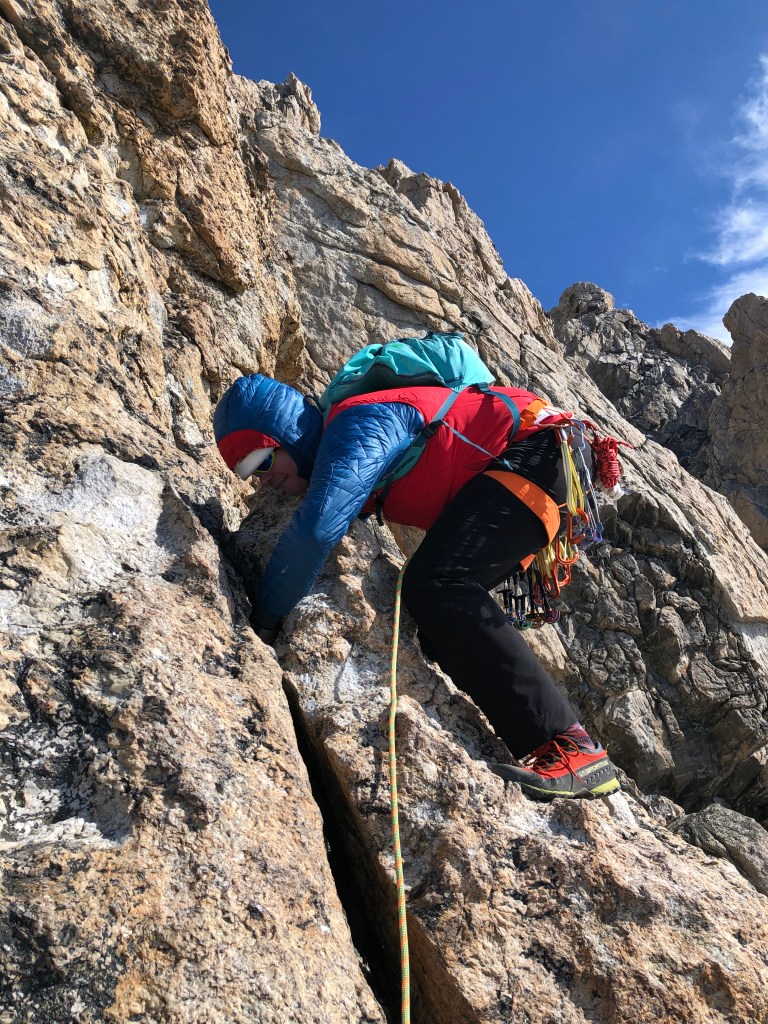
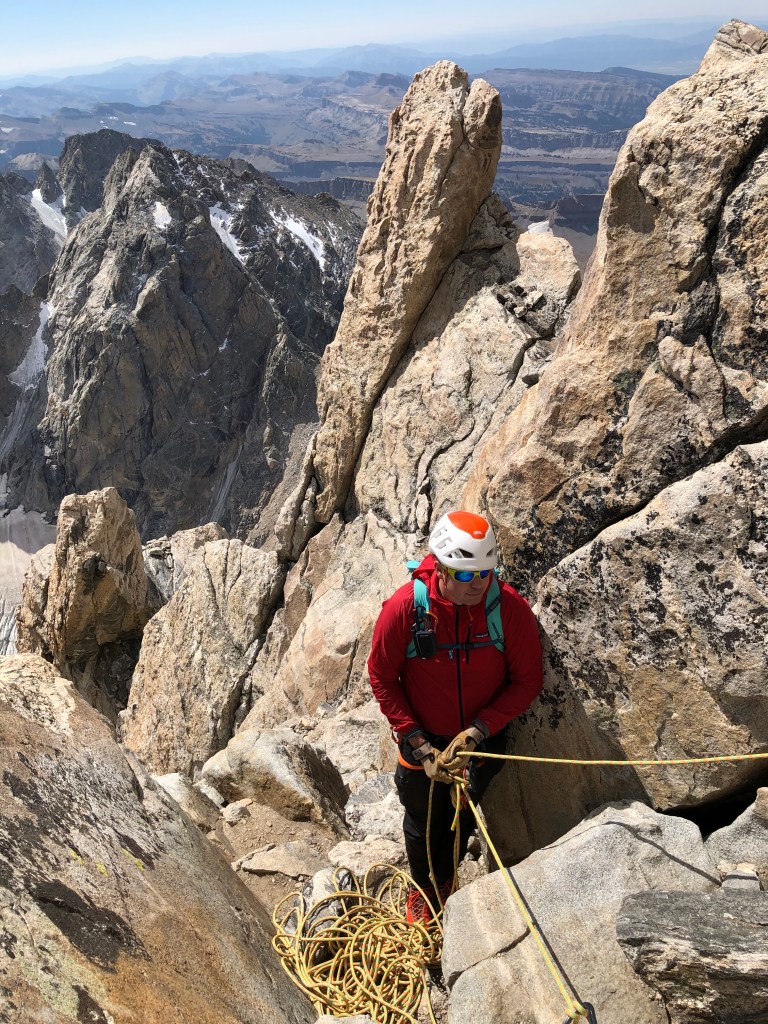
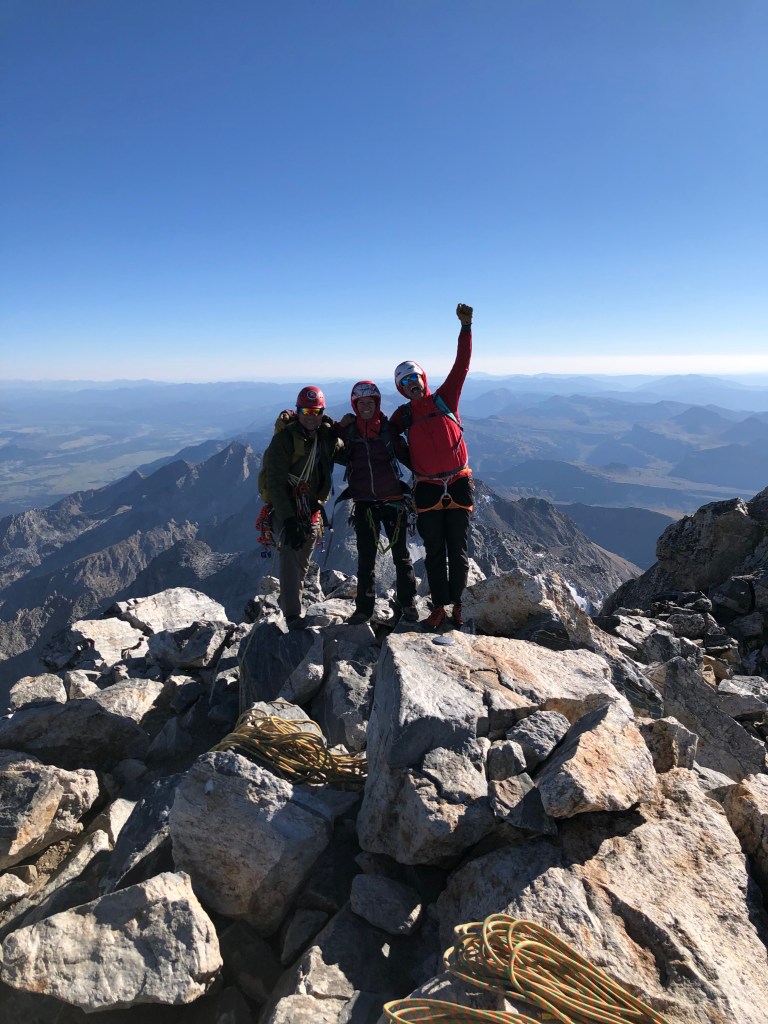
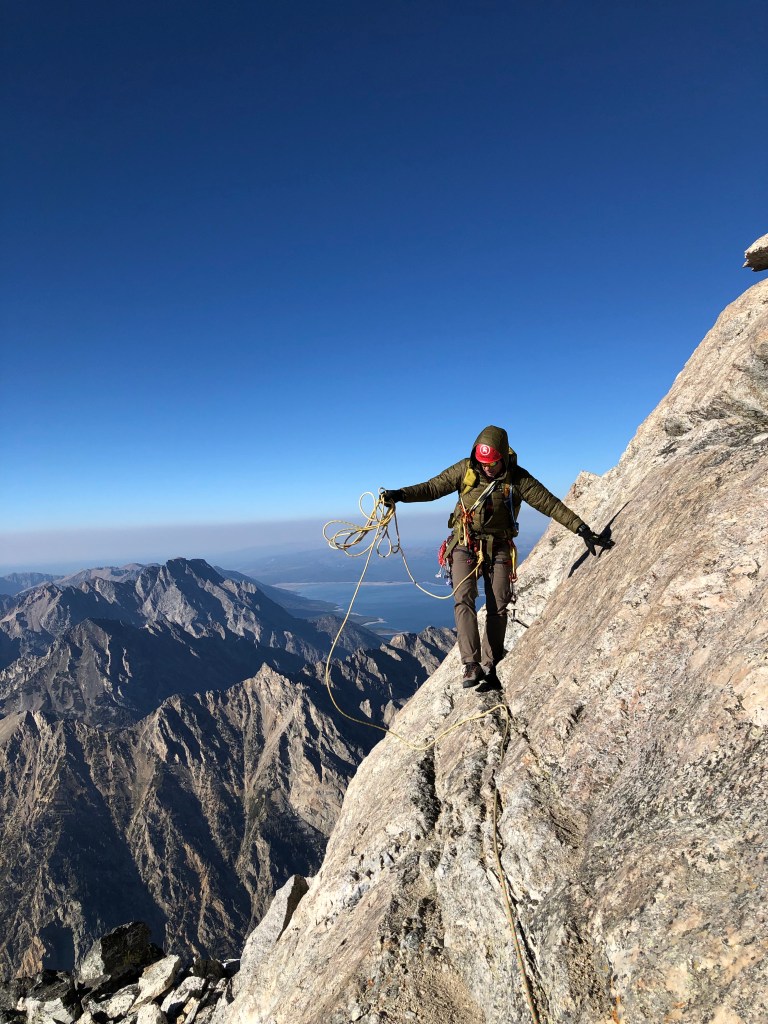
Trip Report: Grand Teton in a day

This is my third trip this season up to Grand Teton National Park. I’ve made four other attempts up there, the first when I was new to trad climbing about 8 years ago with Katie. We made a half hearted attempt and turned around at Wall Street when our ropes were going sideways.

Last year, Katie, Bart and I made an attempt at the end of the season via Petzoldt Ridge. We ended up bailing due to route finding issues and didn’t feel confident in our timing for a safe descent if we pushed forward.

This year, Adam and I climbed Petzoldt Ridge successfully but had to bail once we connected with Upper Exum so Adam could get back to work on time.

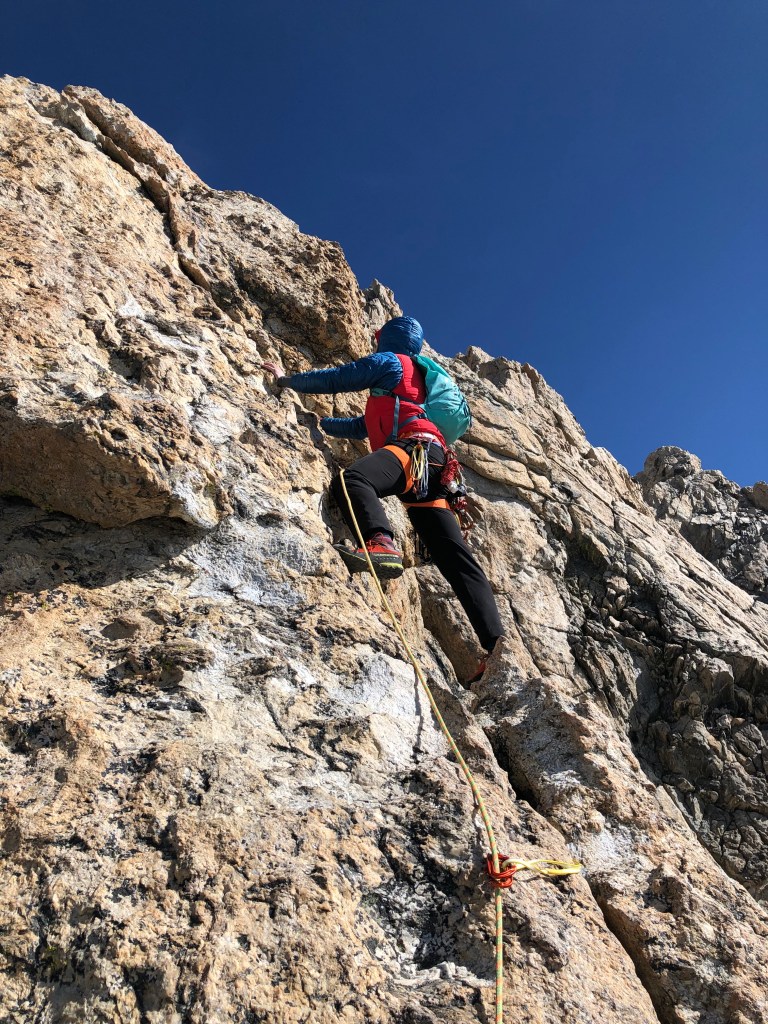
Alpine (rock) climbing is a game of patience. And I have really embraced this mentality of what could be done in a day. Bart and I decided to give Upper Exum one more go before the season ended. Last minute, we were able to get Katie to jump on. We ended up finishing in 25.5 hours car to car. No world record by any means. But a big breakthrough in pushing ourselves in what we think is possible to do in a day. We didn’t solo much but we certainly could have done some more to speed things up.

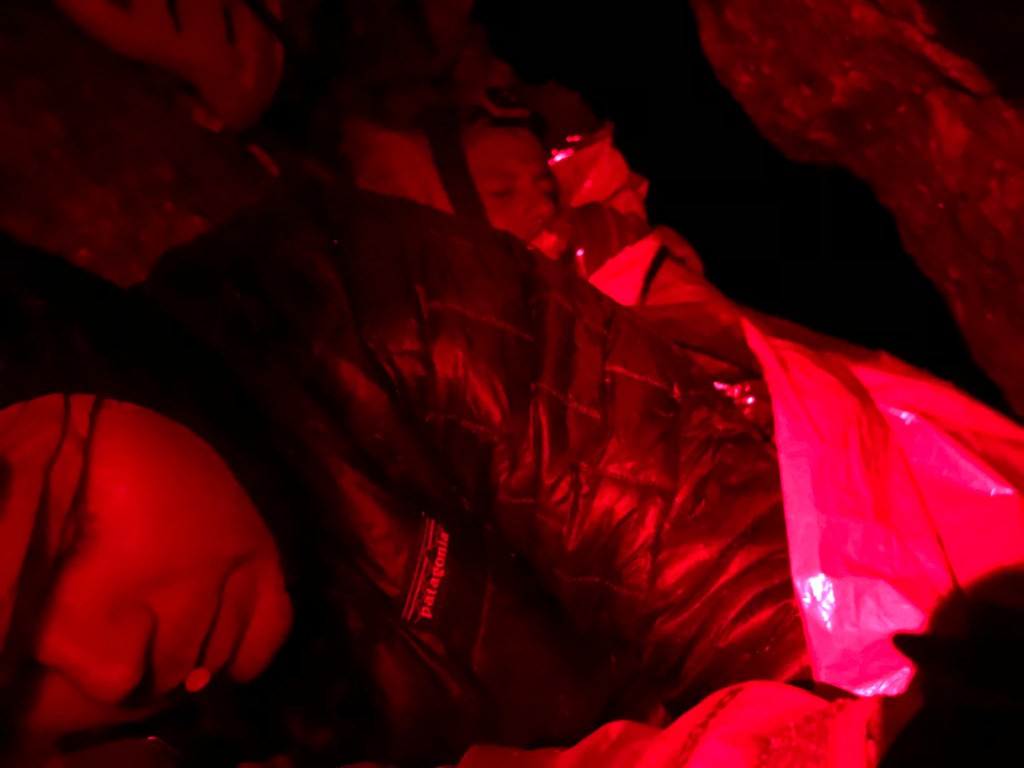
I also had stomach problem that put us behind some groups. It definitely hurt us in the long run having to cut pitches short and wait for the rock above to clear. On the way back, we also found a small cave by a large boulder to sleep for an hour. It was a much needed break.

Gear we brought:

  • BD UL Cams and Z4s from .2-3
  • A set of DMM Walnuts (per Bart’s request)
  • 8 shoulder length slings
  • 2 double length shoulder slings
  • Belay gear and a GriGri
  • Cordelette and 180 cm sling for belay stations
  • A guide draw that I made
  • Prussik and knife
  • 20 feet of webbing and couple biners in case we needed to bail
  • 2 40 meter ropes – our intention was to bring one and use a Beal Escaper until Katie jumped on.
  • Med Kit with Garmin Spot, meds, chap stick, sunscreen, climbers tape, bivy blanket, spare batteries and Goal Zero phone charger
  • Headlamp
  • Rocky Talkies
  • Crampons and ice axe

We used everything except the crampons and ice axe. It was about 3 pounds in slings and pro and another 2 of personal gear. Everything fit snug in my 25L pack. I didn’t bring climbing shoes and would have wanted them to lead the friction pitch (I’m not much of a slab climber). Fortunately, Bart led that pitch for us. I felt fine the rest of the climb with approach shoes and lead probably 65% of the climb (Golden staircase, Wind Tunnel, some of the Jern, everything above the Friction except the V-pitch).

Clothing:

  • Patagonia Capilene Base Layer Expedition bottoms and top
  • Patagonia Softshell Pants
  • Patagonia Airshed Pullover
  • Patagonia Houdini Jacket
  • Patagonia Micro Puff
  • Patagonia Nano Air Vest
  • Patagonia Expedition Balaclava
  • Random headband
  • Petzl Belay Gloves and Showa Temres Gloves
  • Two pairs of socks (I like to switch out for the descent to avoid blisters)

Again I used everything. And I was rarely cold at the belays and was able to shed properly as the day warmed up for us. I probably could have switched out the pants for Patagonia Houdini Pants and probably some lightweight hiking shorts for the approach. But overall, it was a fantastic setup.

If you haven’t had a chance to read Colin Haley’s words on clothing, it definitely changed how I view clothing systems in the alpine. I essentially ripped off everything he recommends.

“The truth is out there.”

Today’s top stories: Afghanistan, COVID, California recount…

If you have been working to stay informed, it’s easy to seduce yourself into thinking that you’re an expert. As much as we like to think we know what is going on, most of us haven’t taken a biology class since university and don’t actually understand the first thing about how vaccines work.

Impossible to be an expert in every field. Instead we rely on experts to tell us what is actually happening. Creating intellectual gaps when assuming the expert has done the research.

What’s difficult is deciding which experts to follow. As Doug Muder has pointed out, just in the last two decades, you can find the government lying about Saddam hiding weapons of mass destruction, bankers committing fraud and triggering a mass recession, priests abusing children and systematically working to cover it up–it’s much more difficult today to find someone to trust because of how the culture and its leaders have failed so many. Add in the dark patterns of the internet and you’ve created a massive problem of trust.

Biologically speaking, we tend to believe what we hear. Because if someone on the savannah is telling us that there is a sabertooth tiger over by the creek, we tend to stay alive by trusting that person and avoiding the threat all together.

Status roles play a huge role in what we do. If I am to preach to my family and friends about a certain position and it turns out to be wrong, what does that say about me? Our culture has not built a space to change our minds. We tend to double down instead of owning the fact that a position can change as data comes in.

So, what does it mean to do our own research then? It’s understanding which areas we are actually experts in (very few), deciding which topics we like to be more informed on, and where we are going to trust someone who has done their homework. We all have blind spots. We can’t eliminate them but we can mitigate with the help of expert opinion.

It makes zero sense to avoid vaccination when billions have been administered worldwide and when 98% of doctors have taken it. If you are going to go against conventional wisdom here, you have to have a good reason. Not because you read something on Twitter that somehow all the experts missed. It seems silly when we put it that way.

In this example, what we are ultimately saying is, “I don’t trust the experts and the truth is still out there.” If you are not going to listen to scientists or epidemiologists, then who are going to listen to make your healthcare decisions? Because it was only a couple weeks ago, Salt Lake County voted against masks at schools. They “knew” better than the former state epidemiologist who actually studies how viruses spread. In the right circumstances, we trade our values to fit a worldview–a narrative of how we see the world.

That narrative often betrays us because we are unwilling to see the world as it really is.
Full potential

A chair was made for one purpose–to be sat on. And by not sitting on the chair, you are not fulfilling its destiny.

Obviously, we are not chairs but I do like to think each of us have some kind of eternal destiny. That each of us are capable of creating meaning out of our life’s work.

The point being that each of us grow frustrated when we are not being used to our full potential.

Process day

Some days are good. Others are bad. Some are tiring, long, busy, and on and on.

Despite how you felt about the day, the day doesn’t care what you think.

And if you are too busy working to get the environment just right in order to be productive, you are going to be wasting a lot of time.

Perhaps then, instead of focusing on the mood, we should be asking how are process is going?

The work of a professional lies in this sphere. Showing up even when we don’t feel like it is the key to unlocking success.

The elephant in the room

Everyone sees it but everyone is afraid to talk about it.

It’s easy to point out the elephant in the room though. If problems were that big to begin with we would never let them in the door.

But problems rarely start this way. They start small and seemingly insignificant. And then grow over time.

The bigger the problem the less likely we are to work towards solving it. Which in turn compounds the problem.

Business advice

A friend wanted to start a business and was asking for some advice. After hearing the elevator pitch the questions I began to ask were:

Who’s it for? What is the smallest viable audience that you need to sustain a living? Kevin Kelly talks about 1,000 true fans, can you get away with even less?

Think about the long tail. You are not going to be the next greatest hit. Instead be sustainable further down the tail.

How can you be best in the world? Not the entire world but the world that your customers are willing to drive to.

Are you finding customers for your product or products for your customers? They are very much different. The latter being much easier to get through the dip.

How can you cut overhead? What can be done for free and given away generously?

Let’s see your portfolio. If you don’t have one, how can you build a portfolio? Why should we trust you?

Are you cheap or expensive? Why not charge more? Are you not worth it?

“Oh Captain, my Captain!”

The legendary scene reminds us that the way to get through to each of us isn’t by following the script we have been handed. That the opportunity we each have to connect, to teach, isn’t by following the step-by-step set of instructions. But to listen, to inspire, to tell stories that resonate with those you seek to change. Regardless of what the status-quo says we should or should not do.

Isn’t that what we all want? Authenticity. Something real. Something worth remembering. This is what art is all about. Bending, stretching the rules and culture norms to make change happen.

Quit following the script and be prepared to disappoint authority–those who have spent their life to uphold the system that benefitted from it.