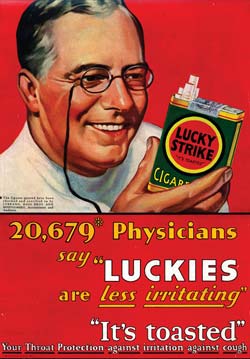
50 years ago, doctors were prescribing cigarettes to get rid of a nagging cough.
Fake news isn’t anything new. What we are realizing though, is that it is a reflection of ourselves—of what we want.
And what we want is to believe that cigarettes don’t cause cancer. So we will search for “evidence” or “statistics” to support our narrative. That it’s actually not that bad for us. (The benefits outweigh the cost.) We can continue to do whatever it is we want to do—free of the guilt and shame. We can push the consequences further away.
Hence, the real problem with fake news is: Most people have already made up their minds about the world. Their opinions are formed. They are set in their world view. Which leads us down a dangerous road of picking your own truth.
The answer isn’t to make up our minds and then search for news to support our believes. The answer is to have the courage to say, “I don’t know.” The answer is to be persuadable. To be curious. To be a truth-seeker. And to be open to change when real evidence presents itself.
Most of the time, when we make a mistake it won’t cost us more than inconvenience. One cigarette won’t kill us today. 20 won’t either. But 20 cigarettes per day over a lifetime will cut years off your life.
It’s the accumulation of everyday decisions over an extended period of time that form our culture. Hopefully, it can be a culture that we’re all proud of.
[The best antidote for fake news: Before we send anything out ask yourself, Is this something you’re proud of? Would you put your name on it?]
 Josh Allred's Blog