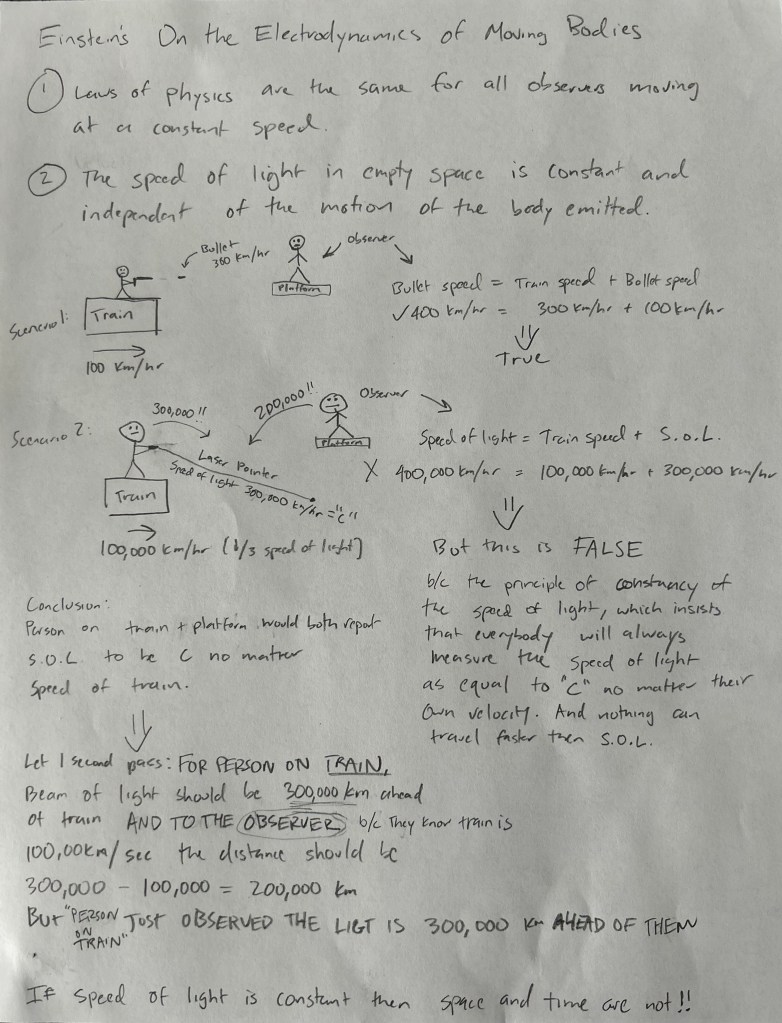
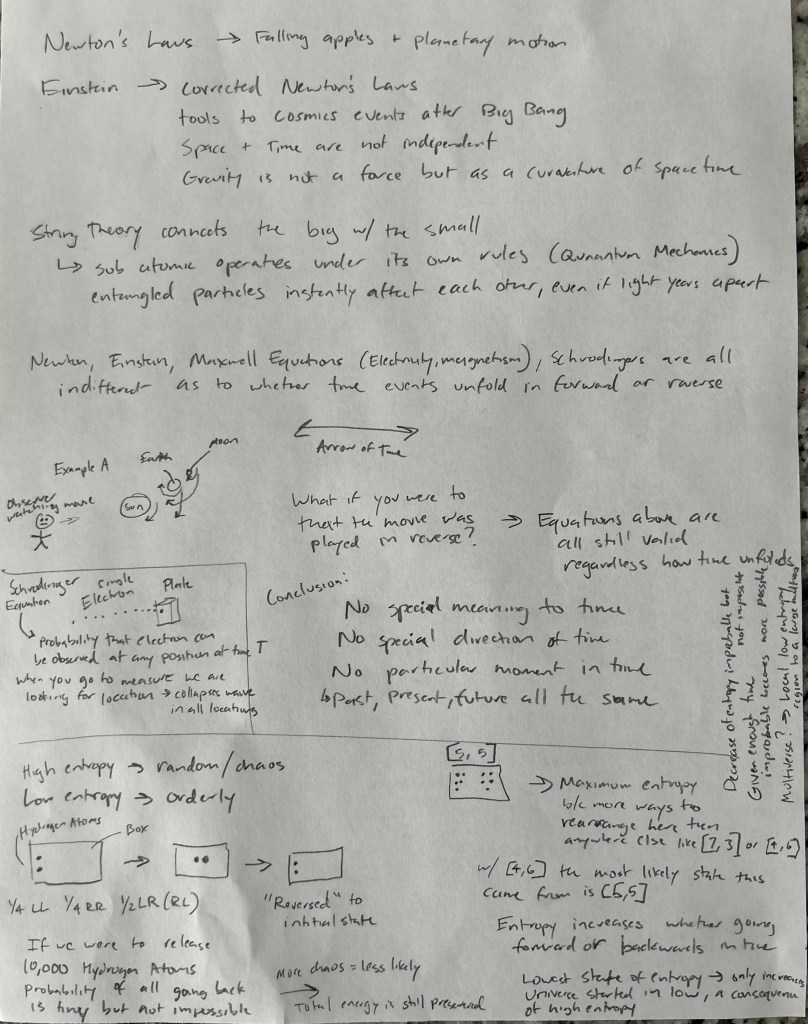
Understanding Einstein’s Theory of Special Relativity

Here is my attempt in understanding how things can be totally true but cannot be proven. Our perceptions don’t match reality. In a world of science and physics, it contradicts how we move through the world every moment of every day.

Indeed, now is as ambiguous to time as here is to space.

HT Your Brain is a Time Machine

Ambition and talent

Ambition can far exceed one’s ability. That is the price of dreaming. We can imagine a world that stretches our boundaries. It also gives each of us inspiration. And since the world is built on ideas, and when people are pointed toward a singular goal; the sum can be much greater than the parts.

Constant

Never is a long time.

Always is a constant.

Neither words are an accurate description of the current state of things.

Because what we are usually seeing is a situation that changes. Not a universal law like gravity.

Spreading happiness

It seems simple. But to put it into practice is much more difficult then we realize. It’s harder to be happy for those that we are secretly jealous of and when we don’t think we are in the place that we should be.

Conditions matter. When we see where things are currently are and not what could be, we suffer. And when we can’t sit in the current state of affairs, we want to flee.

Being happy for others, celebrating victories and accomplishments is a skill. It requires us to put away our feelings and to recognize others.

Perhaps, it can then serve as fuel to change. Spreading good cheer lightens our moods. As a result, we are less hard in how we approach the world.

The pain of patience

Patience is considered a virtue by most. To abstain from aggression breaks the cycle of violence. More importantly, it opens us up to listening what the other side has to say.

But that doesn’t mean virtues are easy to execute. With patience often comes a pain. Just because you choose to stay in patience doesn’t mean their isn’t heartache. Often you are left with being hot around the collar. Perhaps, the other side has wronged you and you have to wait for them to come around. Whatever the case may be—patience causes tension which often translates to tenderness and pain.

You might have made the best decision you could but it doesn’t mean it’s easy to play through. And with patience, it’s okay to feel sad, remorse and regret.

Data and stories

If you torture the numbers enough they will confess to anything. You curate any story, any narrative you choose. And have all the data to back it.

Which means we need to become aware of things how they are and not how we want them to be.

Cumulative

The older you get the culmination of your decisions are realized.

Brushing your teeth.

Eating marshmallows.

401k.

And so much more.

Your decisions at the moment can seem inconsequential and yet weigh so much heavier the longer life goes on.

Dissecting an opinion

Abortion is a triggering word for most people. And so is religion, gun control, taxes, welfare, etc.

Humans are emotionally charged because of how opposing views threaten our way of life. But when we become curious about others’ views and when we are not threatened by them then a dialogue can begin.

Nonviolent leaders understand this. That you can still maintain your point of view and still be open and listen to why people think/believe the way they do.

We must first understand the charge behind the decisions people make.

Anger is therefore the dedication of our P.O.V.

Speed of information

We talk about how there is so much data available. More than any library can ever hold. Access is fast. Which creates cognitive overload.

As a result, the speed of making decisions has never been faster.

With communication at our fingertips, it is expected to be available. To get back to the boss in an instant.

And that in turn creates more overload.

Finding fault is relentless

If someone says, “It’s my mistake.” People tend to move from assigning blame to solving the problem rather quickly. What else is there to say if someone admits fault? Unless the courts have to step in, then it’s the accuser’s fault for not moving on.

Finding fault doesn’t stop moving until someone admits they made a mistake. Unfortunately, our culture has been wired this way. Blame means you can be exposed. Exposure can diminish the appearance of competence and that can lead to getting fired.

There is another side to this.

The magic of accountability is when we are vulnerable enough to accept when we made a mistake, solutions become more fluid. When we trust that the people around us care enough and don’t want to see our demise, the culture works better.

Trust is the lubrication of the gears of capitalism.