When time is limited, your ability to think through decisions goes down. That is why when people are rushed, we compromise our values in order to please the clock. In this framework, the clock is our master, not our moral compass.
Month: January 2023
If you insist that an idea is yours, you are going to have a hard time spreading it.
And if an idea can’t spread, you are severely limiting the change you seek to make.
Until someone decides to take action, ideas are never born. They remain in the ether.
Ideas are not original. They are built upon the body of work that has come before us. The day may come when you will have to decide if you want credit or to see your idea grow.
You are not entitled to fame for starting a movement.
If you were to make 1,000 sales calls, would you be better at sales than you are today?
You can reasonably say that somewhere in those sales calls you will be able to see what worked and what doesn’t. Perhaps, you make some sales along the way.
And if you were to write one blog post every day, can you say after 2,500 you will be better at writing?
Of course.
The same can be said with miles walked, push-ups, and starting a business.
When you get to the next step then you can evaluate the next iteration. You can decide whether you want to go left or right but either way, you are on the path.
We get too stuck on the end result that we forget what we can actually control and evaluate our actions.
Marco Collins is one of the few DJs in the Rock Hall of Fame. He is famous for discovering bands like Nirvana, Pearl Jam, Beck, and playing them on the air for the first time.
There is value in having a pulse on what is happening and understanding what you see and hear others will like too.
Having good taste is knowing the punch line to an inside joke. Not everyone will get it but “if you know, you know.”
I read a license plate that said, “There’s more to life than worrying about gas mileage.”
It got me thinking about how the more scarce you believe the resources you value are, the more you are willing to fight for them.
That seems true to me. After all, children don’t grow on trees and many parents are willing to go to the ends of the earth to protect them. The same is true about toilet paper, baby formula, gasoline…
When we come from a position of abundance, we are more likely to give. Abundance can be a dollar amount but it is more of a mindset than anything else. Which is ultimately another story we tell.
We don’t blink spending $8 on a cup of coffee but if we saw a $98 increase in taxes for education people will notice.
Context matters. It changes the story we tell about the situation we are in. And when we take a step back, we can see that there are more degrees of freedom than how we feel in the moment.
No other species on the planet plans for the future like humans do. And yet…
The marshmallow experiment has taught us that we struggle to act in our own self-interest in the long run.
We sacrifice our health tomorrow so we can eat what we want now.
We spend money on a new car and forgo investing in our 401K.
We continue to release copious amounts of carbon that is destroying the only planet we got.
If we stopped to imagine ourselves in the future, we might be more inclined to better behave. It’s still difficult because we don’t know when our time is up. But when we say yes to everything we want at the moment, we are left bankrupt.
What a predicament.
One of the things that make humans special is that we can act against our instinct.
We constantly overestimate what is going to happen today while simultaneously underestimating what will happen tomorrow.
That is why we are so good at putting something off for our future selves to deal with. If we are lucky, we don’t have to deal with it at all.
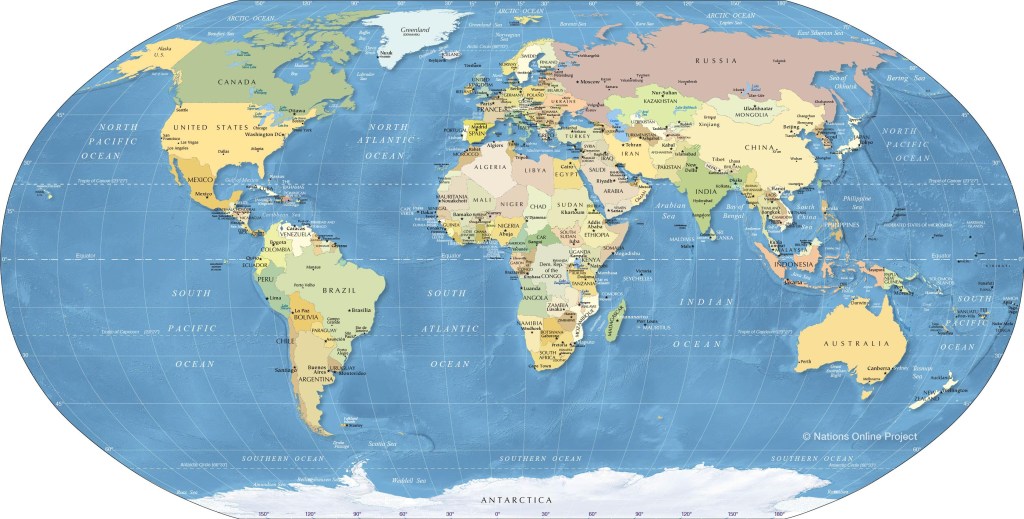
The map of the world as we perceive it:
The earth as is:
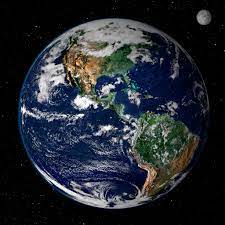
They are not the same things. We draw these lines as some sort of illusion…
The games we play to define and defend these lines.
“If I take one more step, it will be the farthest away from home I’ve ever been.” – Samwise Gamgee
Fortunately today, we don’t have to cross large bodies of land to destroy a magic ring. “The farthest from home I’ve ever been” can have lots of meaning today.
The one that interests me though is the edge of uncertainty. Home can be our comfort zone. Yet, we create these invisible boundaries for ourselves thinking we can’t cross them because that is unknown territory.
There are many lessons to learn from Tolkien’s world–stepping into the unknown is the start of an adventure.
 Josh Allred's Blog